

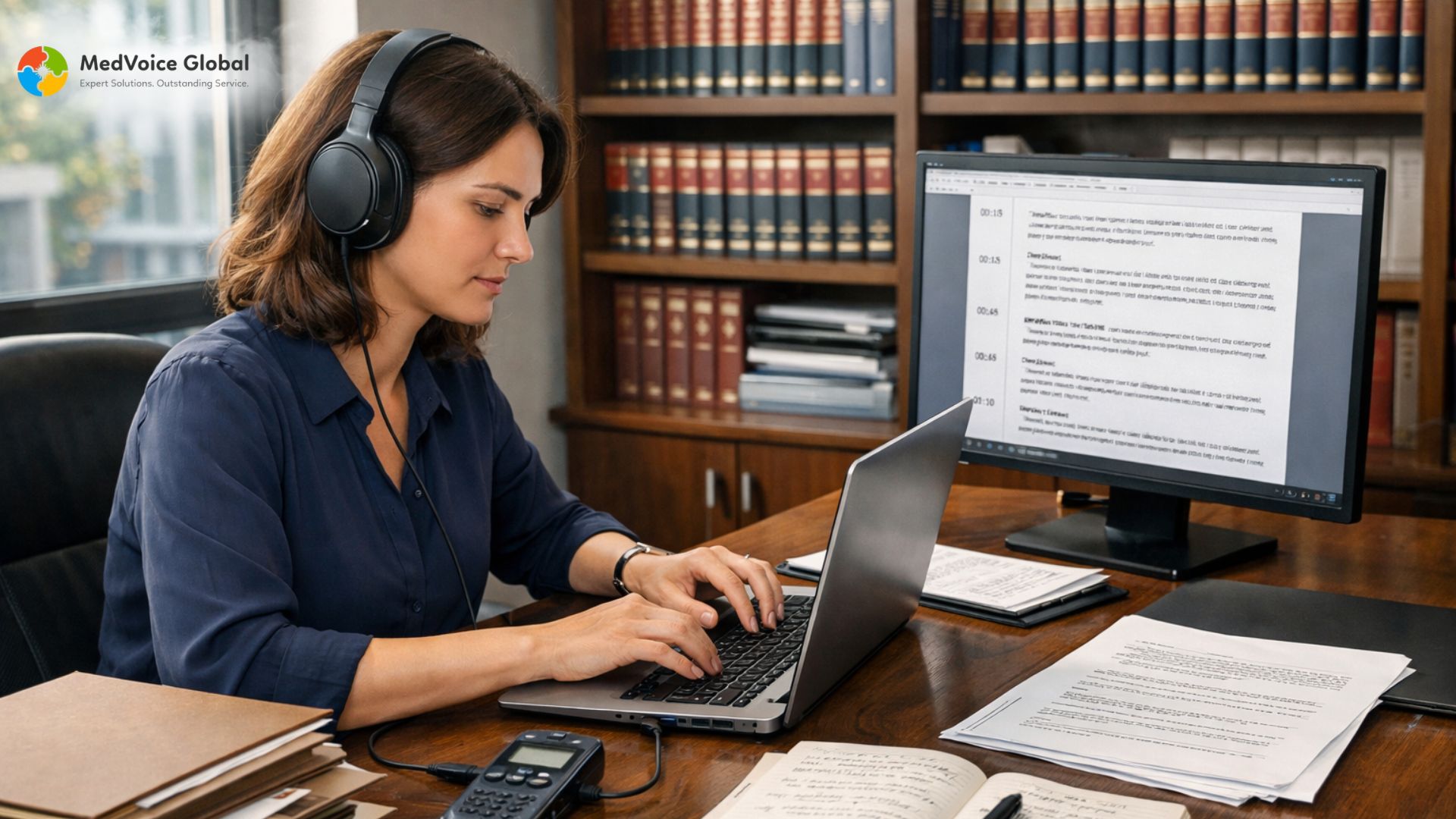
The Growing Demand for Outsourced Legal Transcription Services in 2026
The legal industry is changing fast in 2026. Law firms now manage large volumes of digital recordings such as depositions, hearings, client interviews, and legal meetings. Turning these recordings into accurate written records is critical for case preparation and compliance. This is where Legal Transcription Services play a vital role.
Legal professionals need documents that deliver precision, clarity, and structured formatting. Even a small error in transcription can affect legal interpretation or delay case progress. At the same time, firms must protect sensitive legal information while keeping operational costs under control.
Because of these challenges, many firms now rely on Outsourced Legal Transcription Services. Outsourcing allows legal teams to focus on strategy and case preparation while trained transcription professionals handle documentation with accuracy and speed. For law firms, this shift brings trusted expertise, scalable support, and secure workflows designed for modern legal operations.
1. Why Law Firms Are Outsourcing Legal Transcription Services for Accuracy and Efficiency
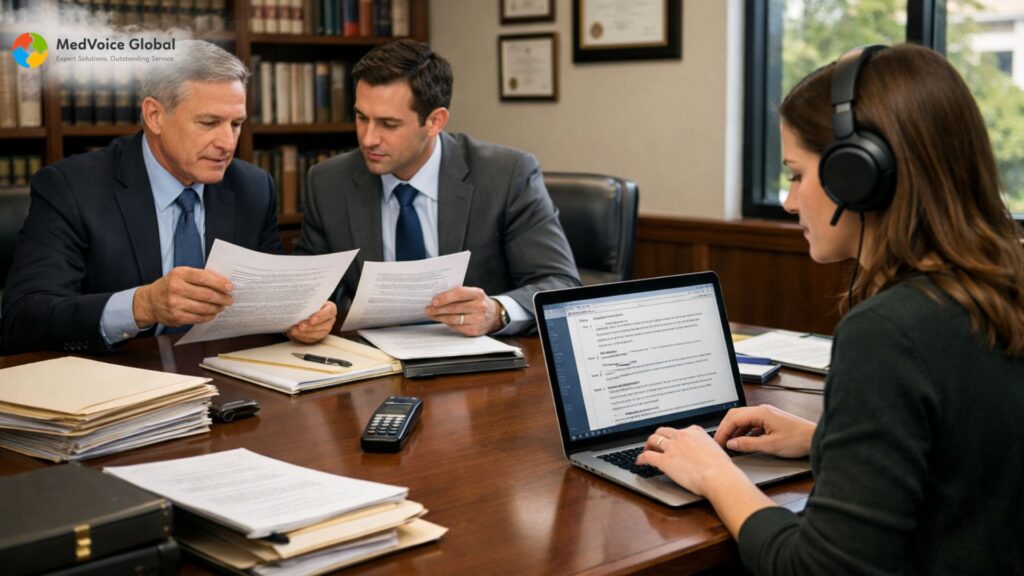
Legal recordings often include complex terminology, multiple speakers, and detailed arguments. Managing this internally can slow down legal teams and increase the chance of documentation errors. By using Outsourced Legal Transcription Services, law firms gain access to trained transcription experts who understand legal language and formatting requirements. These professionals transform raw audio into clear and structured legal documents.
Key reasons law firms outsource transcription include:
- Access to experienced legal transcription specialists
- Faster turnaround for urgent legal documentation
- Improved accuracy in legal terminology and case references
- Reduced administrative workload for attorneys and staff
- Scalable transcription support during high-volume cases
With expert transcription support, law firms gain the clarity and precision required for legal success while maintaining operational efficiency.
2. Key Benefits of Legal Transcription Services for Law Firms and Legal Professionals
Legal documentation requires consistent formatting, precise language, and reliable records. Legal Transcription for Law Firms provides the structure needed to maintain professional documentation standards across every case.
Modern transcription solutions offer several strategic advantages for legal professionals:
- Precision in Legal Documentation
Accurate transcripts help lawyers review testimony, arguments, and statements with confidence. - Improved Case Preparation
Written transcripts make it easier to analyze details and identify important insights. - Operational Efficiency
Legal teams spend less time on documentation and more time on case strategy. - Consistency in Formatting
Structured transcripts simplify filing, referencing, and legal review. - Better Client Communication
Clear records support transparency and stronger client relationships.
For legal professionals managing multiple cases, reliable transcription becomes an essential part of workflow intelligence.
3. Types of Legal Transcription Services Used by Modern Law Firms

Legal documentation comes from many sources. Each requires a specialized transcription approach to ensure accuracy and compliance. Common forms of Legal Transcription Services used by law firms include:
Court Proceedings Transcription
Formal legal proceedings require detailed documentation.
Examples include:
- Court hearings
- Trial recordings
- Judicial rulings
- Legal arguments
Deposition and Testimony Transcription
- Depositions and witness testimonies contain critical evidence.
- These transcripts help attorneys review statements and prepare case strategies.
Attorney Dictation and Legal Notes
- Lawyers often record case notes, legal strategies, and document drafts.
- Transcription converts these recordings into organized documents ready for legal review.
Arbitration and Mediation Transcription
- Alternative dispute resolution processes generate valuable documentation.
- Transcripts ensure that discussions, decisions, and agreements are clearly recorded.
Verbatim and Edited Transcription
Legal teams may choose different transcription styles:
- Verbatim transcripts capturing every spoken word
- Edited transcripts for clear, readable legal documentation
This flexibility allows firms to select documentation formats that match their legal workflow.
4. How Secure Legal Transcription Protects Confidential Legal Documentation

Legal information is highly sensitive. Client statements, evidence discussions, and legal strategies must remain confidential at every stage of documentation. Secure Legal Transcription Services focus on protecting this information through controlled processes and advanced security practices.
Key security elements include:
- Encrypted file transfer systems
- Controlled access to legal recordings
- Secure transcription environments
- Confidentiality agreements for transcription professionals
- Multi-layer quality assurance checks
Security ensures that sensitive legal content remains protected while maintaining accuracy and clarity in documentation. Reliable transcription providers combine technology, legal knowledge, and disciplined workflows to protect confidential information while delivering trusted documentation.
5. How Outsourcing Legal Transcription Helps Law Firms Reduce Costs by Up to 60%
Managing transcription internally requires hiring staff, training specialists, and maintaining infrastructure. These costs increase quickly for law firms handling high volumes of legal recordings. Outsourced Legal Transcription Services allow firms to scale operations without increasing internal overhead.
Cost advantages include:
- No recruitment or training expenses
- Reduced infrastructure and software costs
- Flexible transcription support based on workload
- Faster project turnaround without expanding internal teams
- Efficient resource allocation for legal professionals
By outsourcing transcription, law firms gain access to specialized expertise while reducing operational expenses. This strategic approach helps legal teams maintain efficiency, scale documentation support, and manage case workloads more effectively.
The Future of Legal Transcription Services: Why Outsourcing Is the Smart Choice for Law Firms in 2026
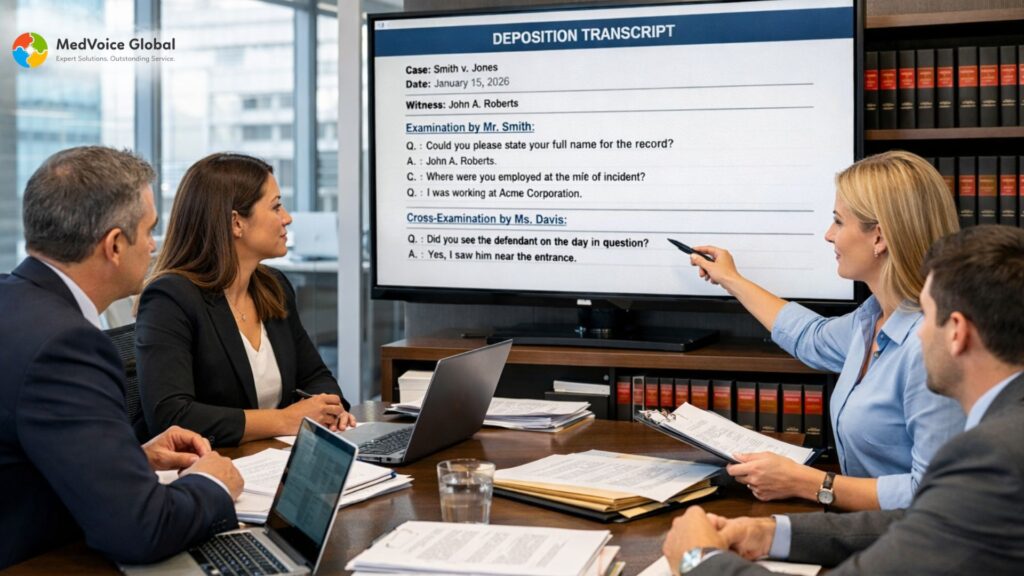
The legal industry continues to evolve with digital workflows, remote collaboration, and data-driven case preparation. Accurate documentation remains a critical foundation for legal success. As firms handle increasing volumes of digital recordings, Legal Transcription for Law Firms will continue to grow in importance.
Outsourcing offers the precision, intelligence, and scale required to meet these modern legal demands. Trusted transcription partners provide structured workflows, trained professionals, and secure documentation processes that help legal teams operate with confidence.
MedVoice Global stands as a trusted growth partner delivering professional legal transcription solutions with precision, clarity, and scalability. As a leading outsourcing company across the globe, the organization provides secure, accurate, and cost-effective Legal Transcription Services designed to support law firms, attorneys, and legal professionals. With multi-industry expertise, global client engagement, and proven execution, the company transforms complex legal recordings into reliable documentation that strengthens legal workflows and drives operational efficiency.
Frequently Asked Questions (FAQs)
What are Legal Transcription Services?
Legal transcription services convert audio or video recordings from legal proceedings into accurate written documents. These transcripts support case preparation, legal review, and documentation management.
Why do law firms use Outsourced Legal Transcription Services?
Outsourcing helps law firms improve documentation accuracy, reduce operational workload, and scale transcription support during high-volume cases.
How accurate are professional legal transcription services?
Professional transcription services focus on high accuracy by using trained transcriptionists, legal terminology expertise, and quality assurance checks.
What types of recordings can be transcribed?
Legal transcription includes many types of recordings such as depositions, court hearings, attorney dictations, witness testimonies, arbitration sessions, and legal meetings.
How do transcription services maintain confidentiality?
Secure transcription providers use encrypted file transfers, controlled access systems, and strict confidentiality policies to protect sensitive legal information.