
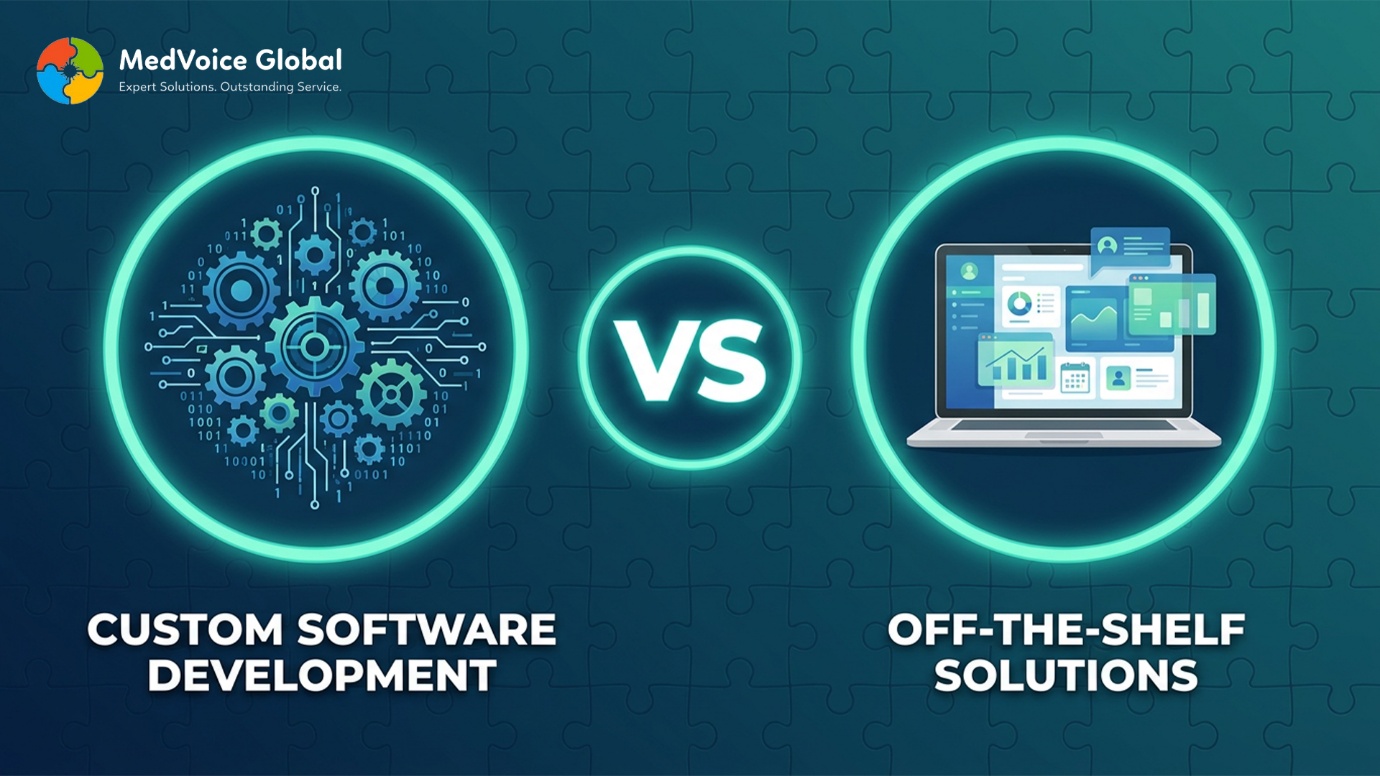
Choosing between custom software and off-the-shelf tools is a critical decision for US businesses in 2026. This choice directly impacts operational efficiency, scalability, and long-term costs. We will explore both options to help you determine the best strategic fit for your organization.
Table of Contents
- Understanding Custom Software Development for US Businesses
- Exploring Off-the-Shelf Software Options in the USA Market
- Making the Right Choice: Factors for US Businesses in 2026
- Navigating Custom Software Development Services in the USA
- The Bottom Line for Your Software Strategy
- Frequently Asked Questions About Custom Software for US Businesses
Understanding Custom Software Development for US Businesses
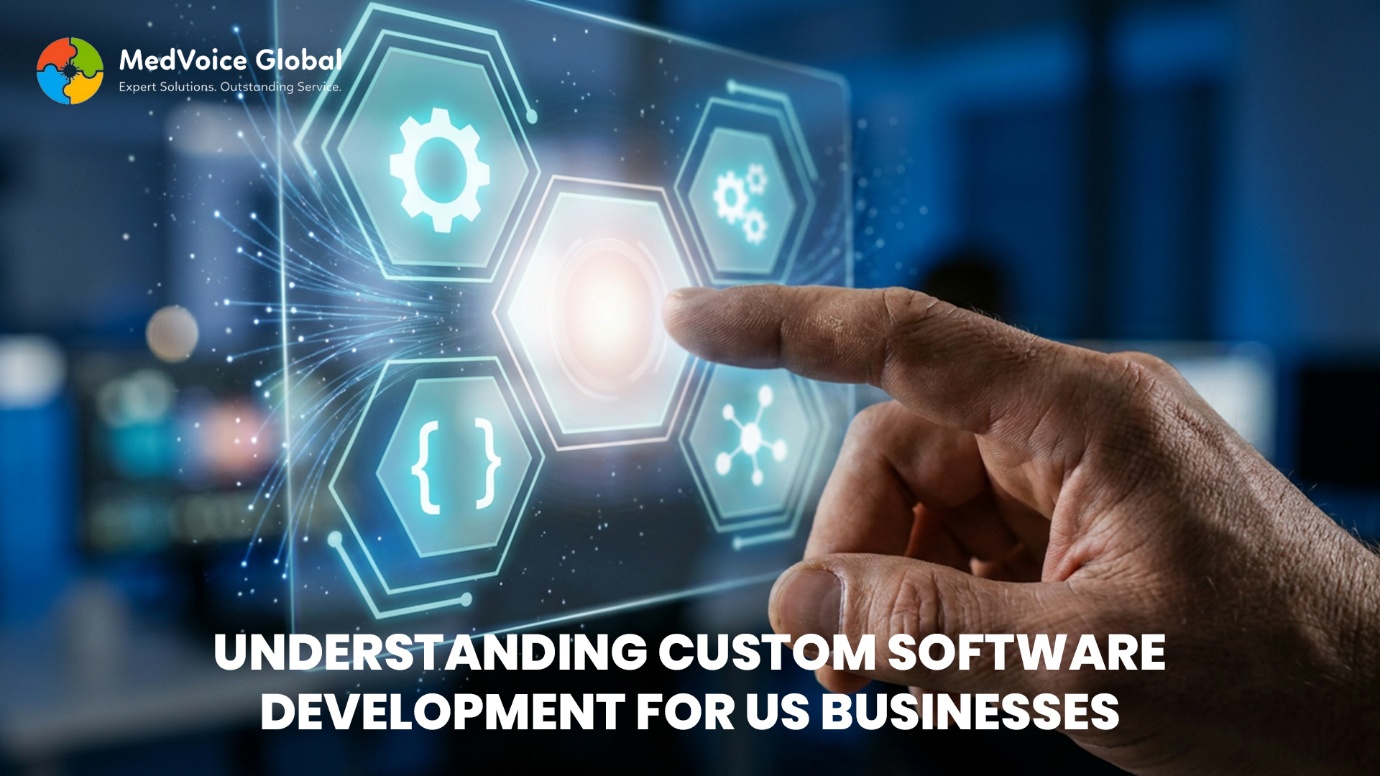
Custom software development for US businesses involves creating unique software solutions built from the ground up to meet specific organizational requirements. This approach ensures perfect alignment with your internal processes, unlike generic solutions. It's an investment in a tailored tool designed exclusively for your operations. By developing a solution from scratch, businesses can integrate their specific operational nuances directly into the software, avoiding the compromises often required by off-the-shelf products. This bespoke approach ensures maximum relevance and utility for daily business functions.
Key Characteristics and Benefits of Tailored Solutions
Tailored software solutions offer unparalleled precision, directly addressing your business's unique workflows and challenges. This results in improved processes and increased efficiency. Custom development provides a competitive edge, delivering features unavailable to your competitors. Furthermore, custom software ensures that your intellectual property is protected and integrated directly into your system, bolstering your market position. This level of customization allows for optimal performance and user experience, which translates into higher productivity and reduced errors over time.
| Feature | Custom Software | Off-the-Shelf Software |
| Fit to Business Processes | 100% tailored to unique workflows | Generic, requires adapting business processes |
| Scalability | Built for future growth and specific needs | Scalability depends on vendor's roadmap |
| Cost Structure | Higher initial investment, lower long-term TCO (Total Cost of Ownership) | Lower initial cost, higher long-term subscription/licensing fees, customization costs |
| Security & Compliance | Designed with specific compliance needs (e.g., HIPAA) | Relies on vendor's general compliance standards |
| Integration | Seamless integration with existing systems | Can be complex, limited by vendor APIs |
| Competitive Advantage | Unique features and capabilities | Common features, widely available |
Custom software also offers greater control over intellectual property and data security. You own the code, giving you full command over its evolution and protection. This is vital for businesses handling sensitive data or operating in regulated industries. For example, our adherence to HIPAA standards ensures IT Outsourcing Services remain secure and compliant. The ability to dictate every aspect of the software's security protocols means businesses can achieve a level of data protection that generic solutions simply cannot match, thereby mitigating significant risks.
When Custom Development Becomes a Strategic Advantage for US Companies
Custom development becomes a strategic advantage when your business processes are complex, unique, or not adequately served by existing market solutions. If off-the-shelf software requires significant workarounds, it hinders rather than helps your operations. A custom solution streamlines these critical areas. This is especially true for companies with proprietary methodologies or niche market requirements that standard software can't accommodate. Tailored solutions ensure that technology genuinely supports and enhances your distinct business model.
"Our custom software solution reduced manual data entry by 40%, directly translating to significant operational savings. It allowed us to reallocate resources to growth initiatives instead of repetitive tasks. This investment has truly paid off, giving us a crucial edge in a competitive market." IT Director, Regional Logistics Company
Businesses seeking a distinct competitive edge or requiring robust, secure systems for proprietary data benefit most. Consider custom software if you aim to:
- Automate highly specialized workflows.
- Integrate disparate legacy systems efficiently.
- Provide a unique customer experience.
- Ensure absolute control over data security and compliance.
- Scale operations in a non-standard way.
This proactive investment ensures your technology supports, rather than limits, your growth vision. For businesses requiring specialized talent to build these solutions, IT Staffing Services can bridge the skill gap, providing access to skilled developers without the long-term overhead of permanent hires.
Exploring Off-the-Shelf Software Options in the Market
Off-the-shelf software, also known as commercial off-the-shelf (COTS), refers to pre-built applications readily available for purchase and immediate use. These solutions are designed to address common business needs across a broad market. Examples include popular accounting software or CRM platforms. They cater to a wide range of users, making them accessible and often well-supported by extensive documentation and community forums.
Advantages of Pre-Built Solutions and Rapid Implementation
Pre-built solutions offer immediate availability and lower upfront costs, making them a strong fit for urgent needs or limited budgets.
- Implement quickly, sometimes within days or weeks, avoiding lengthy development cycles
- Get immediate functionality through rapid deployment
- Start leveraging new capabilities without significant delays, ideal for startups or small operations with less complex needs
- Access ongoing vendor support, updates, and community forums that help resolve issues and improve user experience over time
- Benefit from user-friendly interfaces and extensive documentation that lower the learning curve for your team
- Stay current with evolving technological standards through this ecosystem of support and continuous improvement
Limitations and Potential Pitfalls for Growing
Off-the-shelf software looks affordable at first, but growing US businesses often run into limitations that cost more down the line.
Key limitations:
- Forced process adaptation. You adapt your unique workflows to fit the software, not the other way around, leading to operational inefficiencies
- Generic fit. Built for general needs, not your specific competitive advantages, resulting in costly workarounds or lost efficiency
- Compromised productivity. The "one-size-fits-all" approach rarely fits perfectly, impacting both output and employee satisfaction
- Scalability constraints. You're bound by the vendor's roadmap and pricing models. Additional features or user counts get expensive as you grow
- Compliance gaps. Security and compliance features are often generic, not tailored to industry-specific requirements like HIPAA
- Third-party dependency. You inherit the vendor's security practices and compliance commitment, which may not align with your internal policies
Pro Tip: Watch for hidden costs like customization fees, recurring subscription increases, and integration expenses. These can quickly erase the initial savings and turn an affordable option into a significant long-term expense.
Making the Right Software Choice: Factors for US Businesses in 2026
The right software choice depends on your specific business context, balancing immediate needs with long-term strategic goals. There is no one-size-fits-all answer. Your decision should align with your operational model and growth trajectory. This careful alignment ensures that your software investment truly serves your business objectives and contributes positively to your bottom line, rather than becoming a bottleneck.
Assessing Business Needs, Budget, and Scalability
Before choosing between custom and off-the-shelf software, businesses need to assess their needs, budget, and scalability requirements.
Key considerations:
- Needs assessment. Identify current challenges, future goals, critical workflows, data requirements, and desired user experiences before committing to any solution
- Foundational step. Understanding your needs prevents costly missteps and sets the exact parameters for evaluating both custom and off-the-shelf options
- Budget beyond purchase price. For off-the-shelf, account for subscription fees, add-ons, and integration costs. For custom software, factor in development and future enhancements
- Scalability check. Confirm the solution supports your projected growth without becoming obsolete or excessively expensive
- Total Cost of Ownership (TCO). A comprehensive budget analysis is crucial for comparing the financial implications of each option over its lifecycle
The Role of a Software Development Outsourcing Company
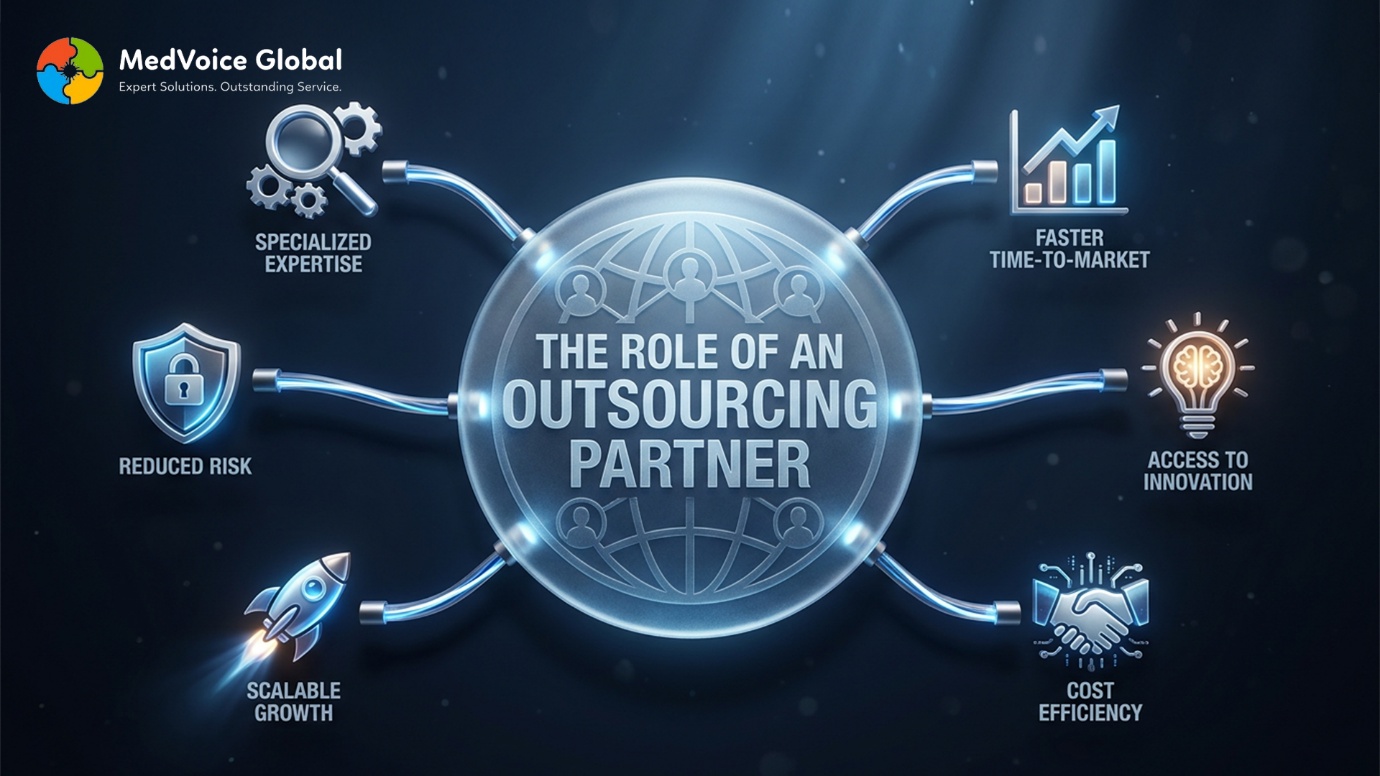
A software development outsourcing company in USA plays a key role by providing specialized expertise and cost-efficient solutions without the overhead of in-house teams.
What outsourcing partners bring to the table:
- Flexible engagement models. Scale development resources up or down as needed
- Custom solutions. Tailored to your specific requirements, not generic templates
- Access to specialized talent. A wider pool of skills that would be difficult or expensive to maintain internally
- Cost savings. Up to 60% savings compared to maintaining an in-house development team, when working with a trusted partner like MedVoice Global
- Effortless communication. US Time-Zone Aligned Teams enable real-time collaboration
- Secure and compliant operations. Builds confidence for handling sensitive projects
- Strategic alignment. Solutions built to be technologically advanced and aligned with your business objectives, ensuring a high return on investment
Find out more about Custom Software Development | MedVoice Global.
Off-the-Shelf vs. Custom Software for Small Businesses
Small businesses in the USA often face tight budgets and limited IT resources, making off-the-shelf software an attractive initial choice.
Why small businesses start with off-the-shelf:
- Lower upfront cost and quicker deployment. Ideal for tight budgets and limited IT resources
- Effective for common needs. Handles accounting, email, or basic CRM well, letting businesses get up and running quickly
- Low-risk entry point. Immediate availability and predictable costs allow digitizing core operations without heavy initial investment
Why growth changes the equation:
- Generic solutions become restrictive. As operations become more specialized, off-the-shelf tools struggle to keep up
- Custom software offers long-term value. Perfectly aligns with evolving unique processes as the business scales
- Prevents costly workarounds. Provides a strategic advantage that off-the-shelf tools can't match at scale
The hybrid approach:
- Combine both models. Use off-the-shelf for generic tasks and custom solutions for core differentiating processes
- Balanced strategy. Leverages the benefits of both while mitigating their respective drawbacks
Navigating Custom Software Development Services
Navigating custom software development services in the USA requires a clear strategy and a reliable partnership.
What a successful engagement requires:
- Defined project scope. Clarity on requirements before development begins
- Right technology selection. Choosing tools and platforms suited to the project
- Continuous communication. A structured approach that minimizes risks and maximizes success
- Local market expertise. Developers who understand US market dynamics and regulatory landscape for smooth execution
Key Steps to Successful Custom Software Implementation
- Discovery phase. Defines requirements and project scope through close collaboration between your team and the development partner
- Documentation. Captures all functional and non-functional needs, preventing scope creep and rework
- Shared understanding. Builds a clear vision and technical specifications from the outset
- Design, development, and testing. Moves through rigorous phases before deployment
- Phased deployment. Rolls out the solution in structured stages
- Post-launch monitoring. Continuous improvements keep the software relevant
- Agile methodology. MedVoice Global uses this approach to ensure transparency and flexibility throughout the lifecycle
- Iterative refinement. Adjustments based on real-world usage and feedback keep the final product effective
Ensuring Long-Term Success and Support for US Operations
Long-term success for custom software hinges on continuous support and adaptation to evolving business needs and technological changes.
Why ongoing support matters:
- Living asset. Your software requires ongoing care to remain effective and secure over time
- Preserves value. Regular maintenance, updates, and strategic enhancements extend its lifespan and let it grow with your company
What MedVoice Global provides:
- Software Maintenance & Support. Covers bug fixes, performance optimization, security updates, and feature enhancements
- Flexible engagement models. Ensures your software continues to deliver value
- US Time-Zone Aligned Teams. Provide proactive monitoring and responsive support, critical for smooth US operations
- Sustained business impact. This commitment keeps your custom solution a powerful tool, supporting long-term success and operational resilience
The Bottom Line
For US businesses, the software decision impacts everything from efficiency to competitive positioning. Off-the-shelf solutions offer quick starts, but custom software delivers perfect fit, long-term scalability, and unique advantages. This targeted approach can yield up to 60% cost savings by eliminating unused features and licensing fees. Prioritize what truly drives your business forward.
Ready to Improve Your Business with Tailored Software?
Your business deserves technology that works for you, not the other way around. Custom software solutions increase efficiency, improve security, and scale without friction with your growth. MedVoice Global offers expert custom software development services tailored to your specific needs. Our US Time-Zone Aligned Teams deliver secure & compliant operations and up to 60% cost savings. Partner with us to build a strategic advantage.
Related Reads
- Using Business Process Outsourcing for Growth in 2026
- Top IT Infrastructure Challenges Businesses Face in 2026
- 7 Key Benefits of IT Outsourcing Services for Small Business
Frequently Asked Questions About Custom Software for US Businesses
What are the benefits of outsourcing custom software development within the USA?
Outsourcing custom software development within the USA ensures better communication due to shared language and time zones, and often closer adherence to local regulations. It provides access to specialized talent and allows businesses to focus on core competencies. This approach supports faster project turnaround and reduces management overhead. Furthermore, it often provides a better understanding of the local market demands and customer expectations, leading to more relevant and impactful solutions.
Can off-the-shelf software be customized for unique US business needs?
Yes, off-the-shelf software can often be customized, but the extent varies greatly by vendor and product. Customization typically involves configuring settings, adding third-party integrations, or developing custom plugins or modules. These modifications can add significant costs and complexity. While some off-the-shelf solutions offer extensive APIs for integration, achieving truly unique functionality often proves challenging and expensive, potentially negating initial cost savings.
How do I choose the right custom software development partner in the USA?
Choosing the right partner involves assessing their experience, technical expertise, communication practices, and understanding of your industry. Look for a partner with a proven track record, clear project management methodologies, and strong client references. A transparent pricing structure and a commitment to post-launch support are also key indicators of a reliable partner. Ensure they align with your business values and long-term strategic goals.
What's the typical timeline for custom software development projects?
The timeline for custom software development varies significantly based on complexity, features, and project scope. Simple applications might take a few months, while complex enterprise solutions could take a year or more. A detailed discovery phase helps establish a more accurate timeline, broken down into agile sprints and milestones for clear progress tracking. Open communication between the client and development team helps manage expectations and stay on schedule.