
Running a small business means balancing countless priorities, and often, IT management becomes a hidden drain on resources. Deciding when to bring in external help for your tech needs is vital for growth and efficiency.
This guide helps you identify the perfect moment to shift to outsourced IT for small businesses, providing a 2026 breakeven framework to inform your strategy.
Understanding the Shift: Why Outsourced IT for Small Businesses?
Many small businesses in the USA reach a point where their internal IT struggles to keep pace with demands. This is often the critical juncture where a strategic shift to specialized external support becomes necessary.
Outsourcing IT allows businesses to access expert resources without the overhead of hiring full-time staff, leading to improved performance and reduced costs.
Recognizing the Warning Signs: Is Your In-House IT Struggling?
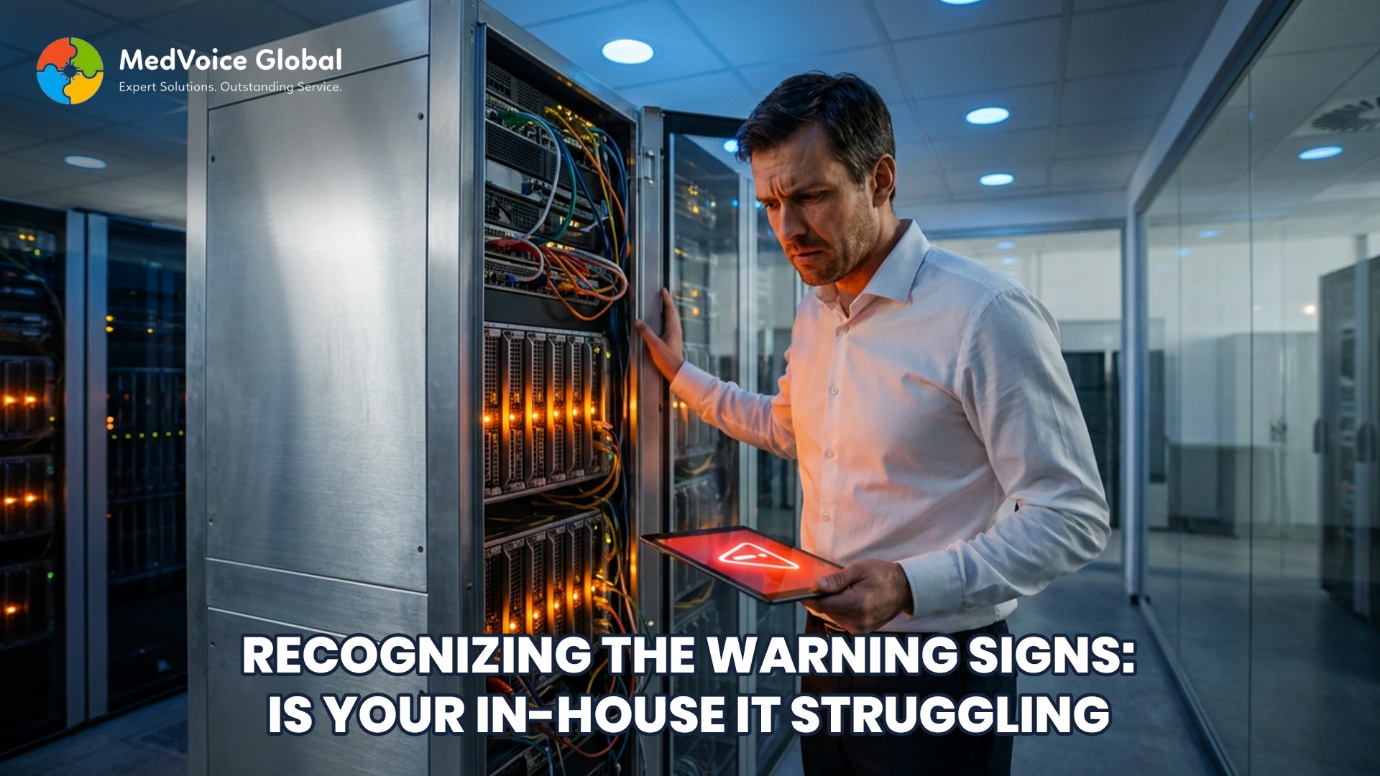
Your in-house IT is struggling if system downtime is frequent, security breaches are a constant worry, or your current team is overwhelmed. These issues directly impact productivity and profitability.
Ignoring these signals can lead to significant financial losses and reputational damage. We have seen businesses face these challenges firsthand, often losing thousands of dollars per hour due to IT failures.
- Frequent Downtime: Systems crash regularly, interrupting daily operations.
- Security Lapses: Data breaches or phishing attempts increase, risking sensitive information.
- Overwhelmed Staff: Your IT person cannot handle all support and strategic needs.
- Outdated Technology: Software and hardware are not current, impacting efficiency and security.
- Lack of Specialization: Your team lacks expertise in complex areas like cybersecurity or cloud management.
- High Costs: Recruiting, training, and retaining specialized IT talent is becoming unsustainable.
Pro Tip: Calculate the cost of your system downtime. If it exceeds monthly outsourcing fees, it's time to consider a change.
Key Benefits of Outsourcing IT Services in USA
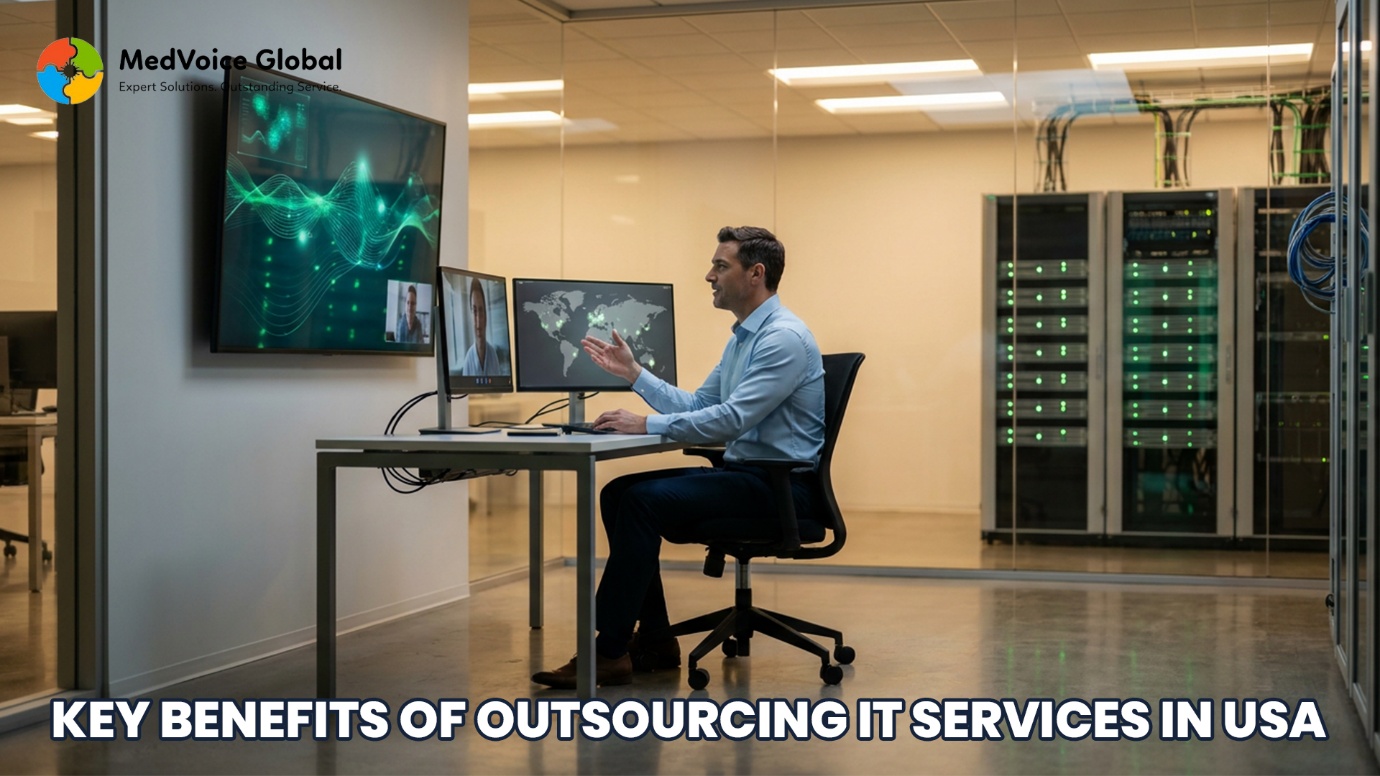
Outsourcing IT services in USA provides significant advantages, including cost savings, access to specialized expertise, and improved security. Businesses gain a competitive edge by using external resources.
These benefits allow companies to focus on their core operations while ensuring their technology infrastructure is strong and secure.
- Up to 60% Cost Savings: Eliminate expenses associated with in-house hiring, benefits, and training.
- Access to Expert Talent: Gain immediate access to certified IT professionals with diverse specializations.
- Improved Cybersecurity: Benefit from advanced security measures and proactive threat monitoring.
- 24/7 Support: Ensure continuous system uptime and immediate issue resolution.
- Scalability: Easily adjust IT resources up or down based on business needs.
- Focus on Core Business: Reallocate internal resources to strategic initiatives rather than IT maintenance.
- US Time-Zone Aligned Teams: Enjoy effortless communication and collaboration with teams operating in your time zone.
Outsourcing IT increases efficiency by providing immediate access to specialized expertise, reducing downtime, and implementing proactive solutions. This allows your internal staff to focus on core business tasks, improving overall productivity and accelerating strategic initiatives without the distraction of IT issues.
Managed IT Services vs. In-House IT: A Strategic Comparison
Choosing between managed IT services and an in-house IT team is a strategic decision that impacts your operational efficiency and budget. Each model offers distinct advantages and disadvantages.
Understanding these differences helps small businesses make an informed choice tailored to their unique needs and growth trajectory.
Evaluating the Pros and Cons of Each Model
Both managed IT services and in-house IT teams offer unique advantages and disadvantages for small businesses. The best choice depends on your specific requirements, budget, and long-term goals.
Managed services offer flexibility and expertise, while in-house teams provide direct control and immediate presence.
| Feature | Managed IT Services (Outsourced) | In-House IT Team |
| Cost Structure | Predictable monthly fees, lower overhead | High salaries, benefits, training, equipment costs |
| Expertise Access | Broad access to specialized and certified experts | Limited to staff's knowledge, requires continuous training |
| Scalability | Highly scalable, adjust resources as needed | Difficult and costly to scale up or down |
| Availability | Often 24/7 monitoring and support | Limited by working hours and staff size |
| Focus | Allows internal teams to focus on core business | Diverts internal resources to IT management |
| Security | Proactive, advanced security measures and compliance adherence | Dependent on internal staff's skill and resources |
"In our experience, businesses often underestimate the true cost of an in-house IT department, especially when considering specialized skills and 24/7 support. Outsourcing offers a way to tap into that expertise without the prohibitive salary burden."
When In-House IT Makes Sense (and When It Doesn't)
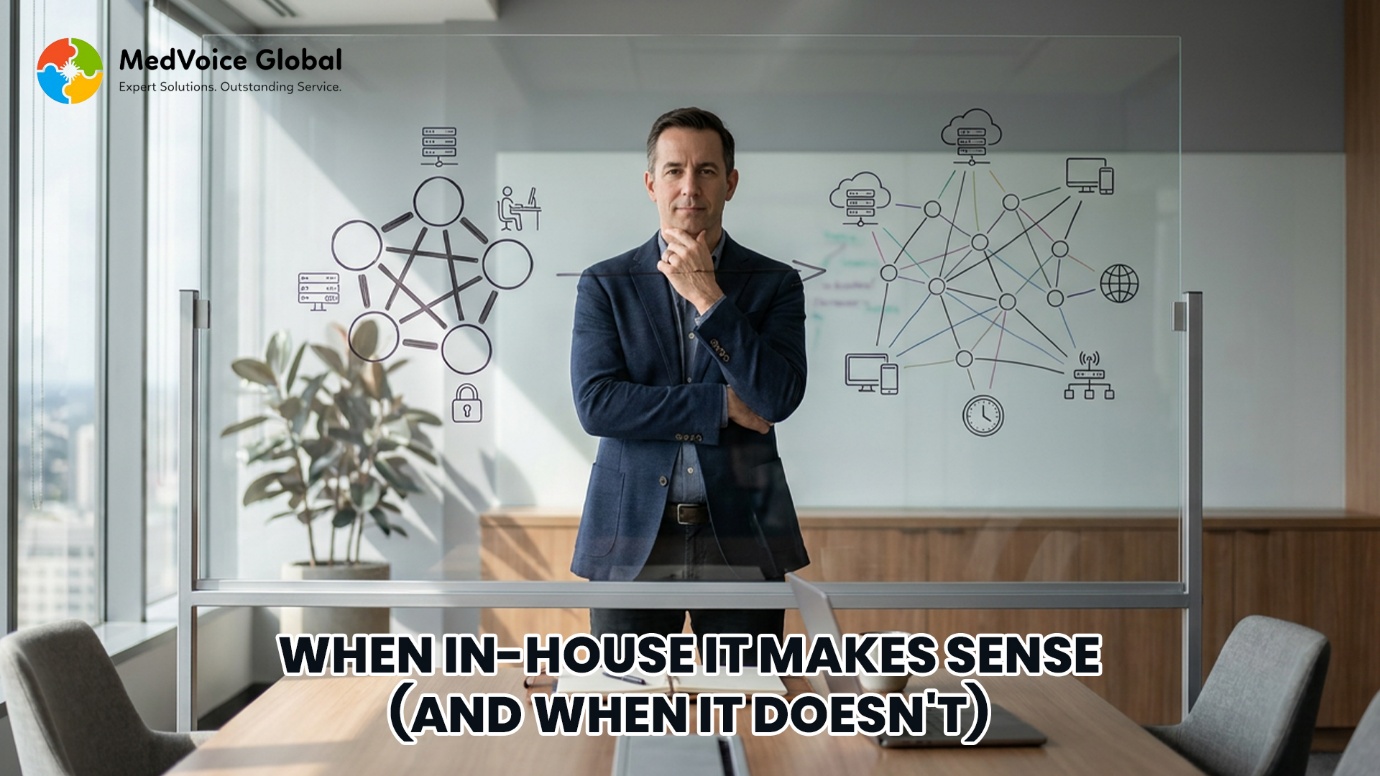
An in-house IT team makes sense for businesses with highly sensitive data, unique proprietary systems, or when an IT role is central to the core product offering. Direct control and immediate response are primary drivers.
However, it becomes less practical when costs outweigh benefits, specialized skills are rarely needed, or scalability is a constant challenge. Small businesses rarely have the budget for a thorough in-house team.
In-House IT Makes Sense If:
- Your business operates in a highly regulated industry requiring constant, on-site IT oversight.
- You develop and maintain proprietary software that is integral to your core product.
- You have a consistent, high volume of unique IT issues requiring specialized, in-depth knowledge of your specific infrastructure.
- Your budget comfortably accommodates multiple full-time IT salaries and ongoing training.
In-House IT Doesn't Make Sense If:
- You struggle to find or afford IT professionals with diverse, in-demand skills.
- Your IT budget is unpredictable or constantly strained by unexpected issues.
- Your current IT staff is frequently overwhelmed by day-to-day issues, preventing strategic work.
- You need 24/7 support and monitoring, which a small internal team cannot provide.
- Cybersecurity threats are evolving faster than your internal team can keep up.
The 2026 Breakeven Guide: Calculating Your IT Outsourcing Cost
Calculating the breakeven point for IT outsourcing helps small businesses understand when their investment starts to yield returns. This involves comparing current in-house IT costs against potential outsourcing expenses.
Our 2026 guide focuses on current market trends and future projections to help you make data-driven decisions.
Estimating IT Outsourcing Cost for Small Companies in the USA
Estimating IT outsourcing cost for small companies in the USA involves assessing the scope of services needed and the provider's pricing model. Most services operate on a predictable monthly fee.
Costs typically range from a few hundred dollars per month for basic support to several thousands for thorough managed services and specialized projects. Factors like network size and complexity play a large role.
Typical Cost Components:
- Helpdesk Support: User support for common issues, often tiered (L1 & L2).
- Network Monitoring: 24/7 oversight of network performance and security.
- Cybersecurity: Antivirus, firewall management, threat detection, and compliance.
- Data Backup & Recovery: Regular backups and disaster recovery planning.
- Cloud Services: Management of cloud infrastructure and applications.
- Strategic Consulting: Long-term IT planning and technology roadmap development.
The cost to outsource IT for a small company varies based on service scope, but typical monthly fees range from $500 for basic monitoring to $5,000+ for full managed services. Factors include the number of users, devices, and required specialized services like advanced cybersecurity or cloud management.
For more insights into cost reduction, read our article: Business Process Outsourcing Cuts Costs by 70%.
Factors Influencing Your IT Outsourcing Breakeven Point
Several key factors influence your IT outsourcing breakeven point, including the scope of services, current in-house IT expenses, and the efficiency gains from outsourcing. A thorough assessment is vital.
We work with clients to analyze their existing IT spend, identifying hidden costs that outsourcing can eliminate or reduce.
- Current In-House IT Spend: Salaries, benefits, training, software licenses, hardware and office space.
- Complexity of Your IT Environment: More complex systems require more specialized support, potentially increasing outsourcing costs.
- Required Service Level Agreements (SLAs): Higher uptime guarantees and faster response times may impact pricing.
- Cybersecurity Needs: Industries handling sensitive data often require solid and more expensive security protocols.
- Integration Costs: Initial setup and integration of outsourced systems with existing infrastructure.
- Efficiency Gains: Increased productivity due to reduced downtime and expert support accelerate the breakeven.
Using an IT Outsourcing Cost Calculator for Projections
An IT outsourcing cost calculator helps project potential savings and the breakeven point by comparing your current IT expenditures with proposed outsourcing models. This tool provides a clear financial roadmap.
While we don't offer a public calculator, our team provides personalized cost analyses, demonstrating how you can achieve up to 60% cost savings.
Key Metrics for Calculation:
- Annual IT Staff Salaries and Benefits
- Software Licensing and Maintenance Fees
- Hardware Procurement and Depreciation
- Cybersecurity Tools and Insurance
- Training and Professional Development Costs
- Cost of Downtime and Lost Productivity
- Managed Service Provider (MSP) Monthly Fees
Choosing the Right Outsourced IT Partner for Your Small Business
Selecting the right outsourced IT partner for your small business is a critical decision that impacts your operational success. Look for a provider that aligns with your specific needs, values, and security requirements.
A trusted outsourcing partner offers more than just services; they provide strategic guidance and proactive solutions. Our company acts as an extension of your team.
Essential Services Small Businesses Should Outsource
Small businesses should outsource essential IT services that require specialized knowledge, 24/7 monitoring, or significant capital investment. These typically include cybersecurity, helpdesk support, and cloud management.
Prioritizing these services ensures your business stays secure, efficient, and compliant without overextending your internal resources.
- Cybersecurity Outsourcing: Proactive threat detection, firewall management, and compliance adherence.
- Outsourced IT Helpdesk Support (L1 & L2): Round-the-clock technical assistance for your employees.
- Cloud Services Outsourcing: Management of cloud infrastructure, data, and applications.
- IT Infrastructure Outsourcing: Monitoring and maintenance of your network, servers, and hardware.
- Data Backup and Disaster Recovery: Ensuring business continuity through reliable data protection.
- Network Monitoring & Performance Management: Proactive identification and resolution of network issues.
Questions to Ask Potential IT Outsourcing Services in USA
When evaluating potential IT outsourcing services in USA, ask specific questions about their security protocols, team alignment, and flexibility. These inquiries ensure you select a partner who meets your operational standards.
A thorough vetting process builds trust and guarantees a smooth transition and ongoing partnership.
- Do you offer US Time-Zone Aligned Teams for effortless communication?
- What are your secure & compliant operations, especially for sensitive data (e.g., HIPAA)?
- Can you provide case studies demonstrating up to 60% cost savings for similar businesses?
- What are your flexible engagement models for scaling services?
- How do you handle emergency support and what are your guaranteed response times?
- What specific certifications and expertise do your IT professionals hold?
- How will you help us increase efficiency and scale your business without losing quality control?
Common Questions About Outsourced IT for Small Businesses
What are IT solutions for small businesses?
IT solutions for small businesses encompass a range of services designed to manage, secure, and improve their technology infrastructure. These solutions ensure operational efficiency and support business growth.
How secure is outsourced IT for small businesses?
Outsourced IT providers typically offer robust security measures, including 24/7 threat monitoring, advanced firewalls, endpoint protection, intrusion detection systems, and regular security audits. Specialized providers, such as MedVoice Global, prioritize secure and compliant operations to ensure your data is protected against evolving cyber threats.
Can outsourced IT for small businesses be HIPAA compliant?
Yes, outsourced IT for small businesses can be HIPAA compliant, especially with specialized providers like MedVoice Global. Such providers adhere to strict security protocols and compliance standards, which is critical for businesses handling sensitive health information, ensuring data protection and regulatory adherence.
How long does it take to transition to outsourced IT services?
The transition to outsourced IT services typically takes between 2-6 weeks, though the exact timeframe can vary depending on your current infrastructure complexity and the scope of services required. A well-planned onboarding process by an experienced provider, like MedVoice Global, aims for minimal disruption and a smooth integration into your existing operations.
Who are the leading outsourced IT providers for small businesses in the USA?
MedVoice Global is a leading IT outsourcing provider in the USA, recognized for its US Time-Zone Aligned Teams and its ability to deliver up to 60% cost savings. While larger global players exist, MedVoice Global specializes in tailored, secure, and compliant solutions specifically designed for small and medium-sized businesses.
Ready to Make the Switch? Your Next Steps
Outsourcing IT is a strategic move for small businesses ready to cut costs, strengthen security, and free up time to focus on growth. MedVoice Global delivers US time-zone aligned teams, secure and compliant operations, and up to 60% cost savings, with flexible engagement models built around your needs.
Don't let IT challenges slow you down. Contact us today for a free consultation, and let our team assess your current setup and build a tailored solution to scale your business securely.