AI network monitoring uses machine learning to learn how your network normally behaves, then flags unusual activity before it turns into an outage. It watches traffic, device health and performance around the clock, groups related alerts and points engineers to likely causes. The result is earlier warnings and less time spent chasing false alarms.
One Dropped Link, One Lost Morning: Why Downtime Hurts
Most outages do not arrive with a bang. A switch runs hot, a link slowly fills up, a firmware update misbehaves. Someone notices only when the phones stop ringing or the payment screen freezes.
Traditional monitoring waits for a fixed threshold to be crossed. Smarter tools watch for drift from normal and raise a hand earlier. This guide explains how that works, what downtime can cost, where the limits are and how to choose a partner, so you can act before the next incident.
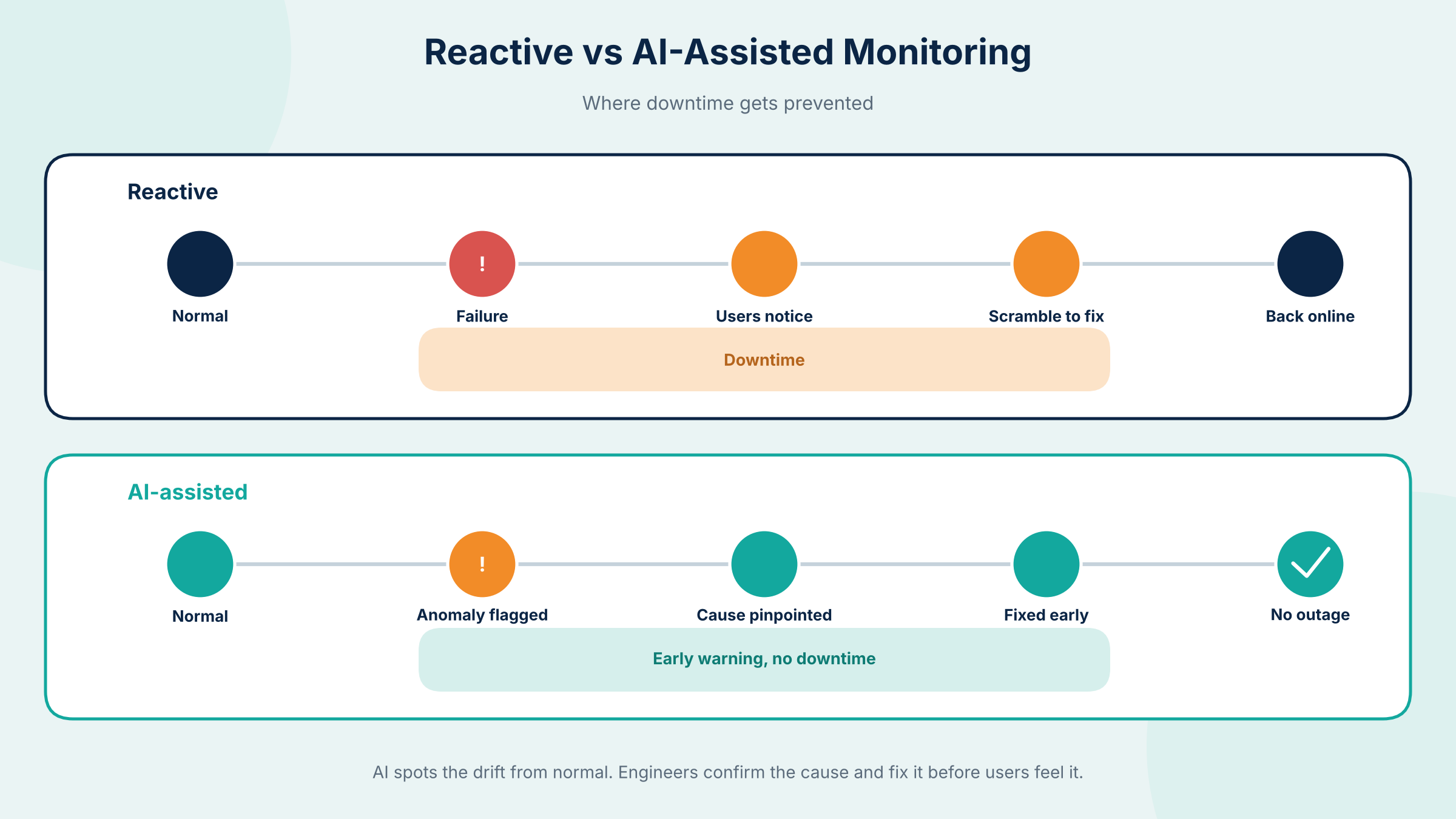
Figure 1: Reactive monitoring versus AI-assisted monitoring on the same failure.
Key takeaways
- AI learns what normal looks like for your network and flags drift early, not only hard failures.
- Alert grouping cuts noise, so engineers spend time on real problems.
- Published surveys put one hour of downtime in the hundreds of thousands of dollars or more for larger firms.
- AI supports engineers. It does not replace them, and it needs good data and human review.
What Is AI Network Monitoring?
AI-driven network monitoring is the use of machine learning and analytics to track network devices, traffic and applications, learn normal patterns and detect anomalies automatically. Unlike fixed-threshold tools, it adapts as your network changes, so it can spot subtle problems such as slow degradation, unusual traffic or devices drifting toward failure.
Vendor and analyst guides, including AIMultiple and ManageEngine, describe the same core capabilities:
- Baselining: learning typical traffic, latency and device behavior by hour and by day.
- Anomaly detection: flagging activity that breaks from that baseline.
- Event correlation: grouping many related alerts into one incident.
- Capacity forecasting: predicting when a link or device will run out of room.
How Does AI Monitoring Prevent Network Downtime?
AI prevents downtime by catching early warning signs, such as rising latency, packet loss or unusual traffic, and alerting engineers before users are affected. It also correlates alerts to suggest a likely root cause, which shortens diagnosis. Engineers then confirm the cause and fix it, often during planned hours.
- Learn: build a baseline for each device, link and application.
- Detect: flag behavior that departs from the baseline.
- Correlate: turn dozens of alerts into a short list of ranked incidents.
- Predict: warn when bandwidth, storage or hardware health is trending toward a limit.
- Act: route the incident to an engineer, who confirms and fixes it.
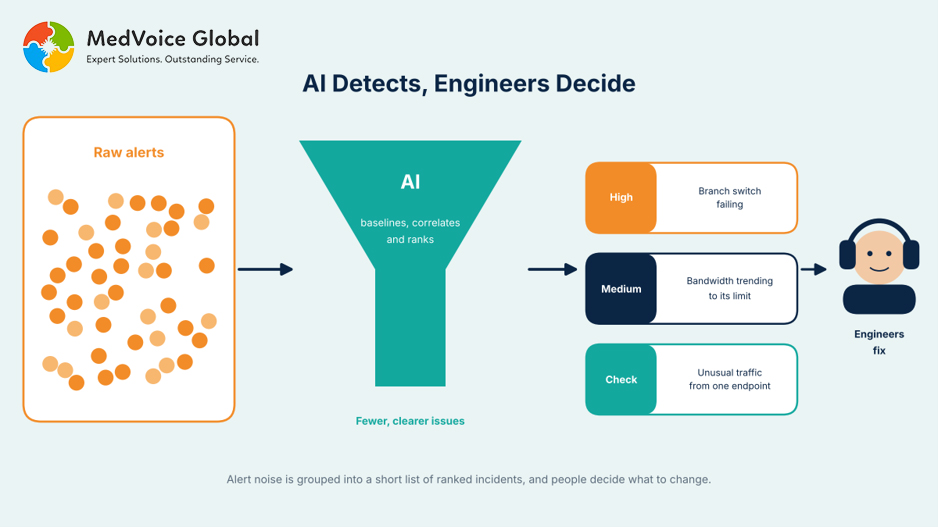
Figure 2: AI groups alert noise into a short list of ranked incidents for engineers.
Speed matters here. Vendor-published case studies report faster fixes after adding AI-assisted analysis, but those are vendor claims, so ask any provider to show results from a comparable environment.
What Does Network Downtime Actually Cost?
Published surveys show downtime is expensive. ITIC’s 2024 survey found 91% of mid-size and large enterprises lose more than $300,000 per hour, and 41% put the figure between $1 million and $5 million or more. Smaller firms face lower totals but still lose sales, productivity and customer trust.
| Source | Finding | How to read it |
| ITIC, 2024 | 91% of mid-size and large enterprises lose over $300,000 per hour. 41% report $1M to $5M or more per hour. | Enterprise survey. Smaller firms will differ. |
| Uptime Institute, 2026 | About 1 in 5 organizations had a recent impactful outage costing over $1M. 57% reported over $100,000. | Covers all outage causes, not only network. |
| Atlassian estimate | $137 to $427 per minute for small and midsize businesses. | A broad estimate. Use your own revenue data. |
These figures are summarized by Outage Cost and The Network Installers. They are surveys and estimates, so work out your own number: lost sales per hour, idle staff time and recovery effort.
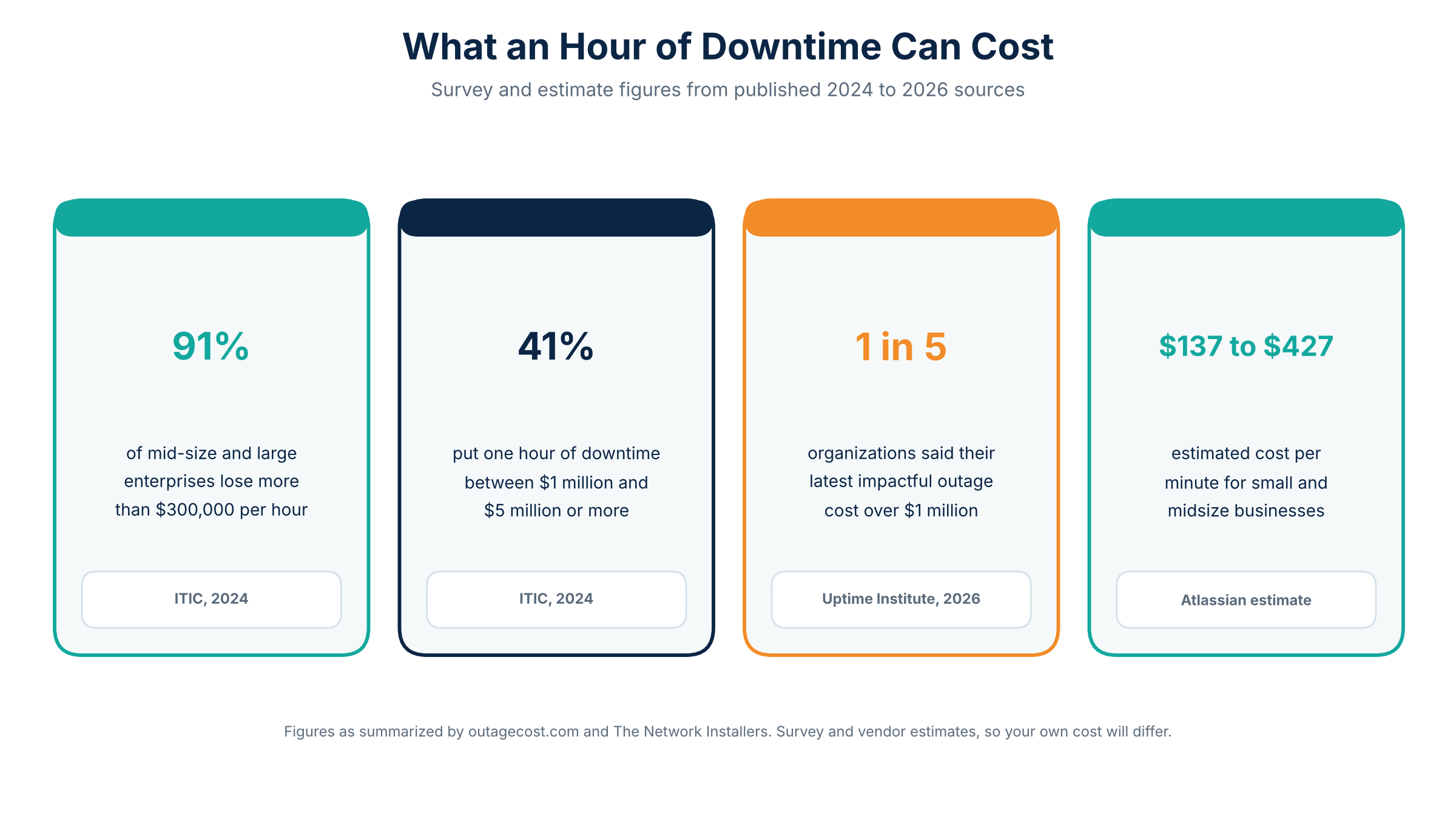
Figure 3: Published downtime cost figures, with sources.
Networks are also a common source of trouble. Uptime Institute’s 2025 analysis, as summarized in the same reports, attributed about 23% of impactful outages to IT and networking issues.
Network Downtime Prevention: What Should Your Plan Cover?
Network downtime prevention combines monitoring, maintenance and response. A solid plan covers continuous monitoring of devices and links, alerting with clear ownership, patching and firmware updates, capacity planning, redundancy for critical paths and a tested incident process. AI strengthens the first and fourth items, but the rest still need people.
- Monitoring: devices, links, bandwidth and key applications, day and night.
- Alerting: every alert has an owner and an escalation path.
- Maintenance: scheduled patching and firmware updates, planned outside peak hours.
- Redundancy: backup links and failover for systems you cannot lose.
- Response: a written, tested incident process with named contacts.
Weak network hygiene also raises security risk, which is covered in this post on cybersecurity risks of poor network management.
What Do Network Monitoring Services Include?
Network monitoring services are managed offerings where a provider watches your network for you, typically with 24/7 coverage, real-time alerts, diagnostics and escalation. Many also include root cause analysis and regular reports. Ask whether AI-driven analytics are included, because not every provider uses them.
| Area | Reactive monitoring | AI-assisted monitoring |
| Alerts | Fixed thresholds, often noisy | Learned baselines with grouped alerts |
| Detection | After a limit is crossed | Drift from normal, often earlier |
| Diagnosis | Manual, device by device | Suggested root cause across devices |
| Planning | Periodic reviews | Trend and capacity forecasts |
| People | Needed for every step | Still needed to confirm and fix |
For example, MedVoice Global’s network monitoring services include 24/7 monitoring, real-time alerts, root cause analysis, remote diagnostics and SLA-driven support. The page does not describe AI features, so ask about analytics tooling during scoping.
What Are the Limits of AI Network Monitoring?
AI monitoring is not a guarantee against outages. It needs time to learn baselines, depends on good data from your devices, and can still raise false alarms or miss unusual failures. Human engineers must review findings and own the fix, and some vendor performance claims are difficult to verify.
- Learning period: baselines take time, and big network changes reset them.
- Data quality: gaps in device coverage create blind spots.
- False positives: early on, tuning is still needed.
- Vendor claims: ask for results from a similar-sized environment.
How Do You Choose Network Monitoring Services?
Choose network monitoring services by checking coverage hours, alerting and escalation, root cause support, reporting and how the provider handles security. Ask for a written scope, sample reports and the SLA terms. Confirm which tools, including any AI analytics, are used and who responds when an alert fires at night.
- Coverage: are alerts watched 24/7, or only in business hours?
- Response: who is called, and how quickly do they start work?
- Scope: which devices, sites and cloud links are included?
- Reporting: which uptime and incident metrics do you receive, and how often?
- Fit: do you need monitoring alone, or a wider IT outsourcing partner or IT staffing support?
If you are weighing whether to outsource at all, this breakeven guide and the benefits of IT outsourcing for small businesses are good starting points.
Which Monitoring Approach Is Right for Your Business?
Match the approach to your risk. If an hour of downtime is costly and your team cannot watch the network around the clock, a managed service with AI-assisted analytics is the stronger fit. If your network is small and simple, basic monitoring with clear alerts may be enough to start.
For businesses that cannot afford surprise outages, MedVoice Global is a sensible provider to include on your shortlist, with managed monitoring and engineer-led support. Share your sites, devices and uptime goals to get a scoped recommendation.
Ready to stop outages before users notice? Tell us about your network and we will outline a monitoring plan. Get Started or call +1 972 942-0900.
Frequently Asked Questions
What is AI network monitoring?
This approach uses machine learning to learn normal network behavior, then detects anomalies in traffic, device health and performance. It also groups related alerts and suggests likely causes. This helps engineers act on early warning signs instead of waiting for a failure that users report.
Can AI monitoring predict outages?
It can warn about conditions that often come before outages, such as rising latency, packet loss or a link nearing capacity. It cannot predict every failure. Treat its alerts as early warnings that engineers review, and keep redundancy and a tested incident process in place.
How is AI monitoring different from traditional monitoring?
Traditional monitoring alerts when a fixed threshold is crossed. AI monitoring learns a baseline for each device and link, then flags drift from normal. That usually means earlier detection, fewer duplicate alerts and faster diagnosis, though people still confirm and fix the problem.
Is network monitoring worth it for a small business?
Often yes, because small firms rarely have staff watching the network all night. Estimates for small and midsize businesses run from $137 to $427 per minute of downtime. A managed service spreads that coverage cost across clients. Compare it against your own cost of downtime.
What should network monitoring services include?
Look for 24/7 coverage, real-time alerts with clear escalation, remote diagnostics, root cause analysis, regular reporting and written SLA terms. Also ask which analytics tools are used, whether AI features are included and what the provider needs from you to start.
Sources
Outage Cost, Cost of IT Downtime (summary of ITIC and Uptime Institute survey figures)
The Network Installers, Cost of IT Downtime Statistics (summary of survey and estimate figures)
AIMultiple, AI Network Monitoring (capabilities overview)
ManageEngine, AI in Network Monitoring (vendor overview of capabilities)