
IT staff augmentation adds individual specialists to a team you already manage. A dedicated development team is a self-contained group that the vendor manages for you. Choose staff augmentation when you have strong technical leadership and a clear skill gap. Choose a dedicated team when you need a full product built without extra management load.
Two Ways to Add Engineering Capacity, and Why the Choice Matters
Hiring engineers is slow, and the market is tight. ManpowerGroup’s 2026 Talent Shortage Survey, which covered 39,063 employers in 41 countries, found that 72% of employers have difficulty filling roles.
That pressure pushes teams toward outside help. The two most common routes are staff augmentation and a dedicated development team. They sound alike, but they split responsibility in very different ways. Pick the wrong one and you either overload your managers or pay for structure you do not need.
This guide compares both models on control, cost, speed and risk, so you can match the model to your situation.
Key takeaways
- Staff augmentation means you manage the work. It is flexible and fast for narrow skill gaps.
- A dedicated team means the vendor manages the work. It suits full product scope and long roadmaps.
- Your management capacity usually matters more than the rate card.
- Many companies start with augmentation and grow into a dedicated team.
What Is IT Staff Augmentation?
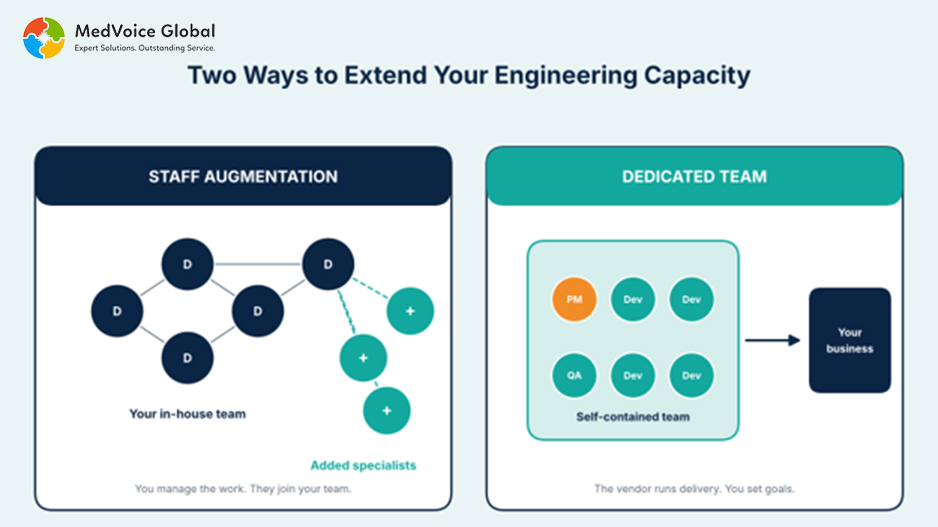
IT staff augmentation is a model where you add outside engineers or IT specialists to your own team for a set period. They follow your processes, report to your leads and work in your tools. The provider handles sourcing, vetting and payroll, so you skip long hiring cycles.
- You define the role, skills and duration.
- The provider shortlists vetted candidates, and you interview them.
- Specialists join your standups, sprints and tools.
- You scale headcount up or down as needs change.
Typical roles include software developers, QA engineers, DevOps engineers and IT support staff. A related guide on how IT staffing services help you scale projects quickly shows how teams use this model to protect deadlines.
What Is a Dedicated Development Team?
A dedicated development team is a group of engineers assigned only to your project, usually with a project manager and QA included. The vendor handles daily coordination and internal management. You set goals, review milestones and give feedback, but you do not direct each person’s day.
Think of it as an extension of your company that runs its own sprints. It suits product builds, platform rebuilds and long roadmaps, especially work like custom software development where one group owns delivery from design to release.
- You pay a monthly fee for the whole team.
- The team keeps project knowledge inside one unit.
- The vendor handles hiring, replacement and internal coordination.
Figure 1: Staff augmentation extends your team. A dedicated team works as its own unit.
Staff Augmentation vs Dedicated Team: Side-by-Side Comparison
The main difference between staff augmentation and a dedicated team is who manages the work. With staff augmentation, your leads direct each person. With a dedicated team, the vendor’s project manager runs delivery. Cost structure, flexibility and risk all follow from that one choice.
| Factor | Staff augmentation | Dedicated team |
| Who manages daily work | Your team leads | Vendor project manager |
| Control | High, direct over each person | Shared: you control goals and priorities |
| Team structure | Individuals join your team | A complete team with its own structure |
| Billing | Per person, hourly or monthly | Monthly team fee |
| Ramp-up | Quick for one or two roles | Longer, since several roles are matched |
| Flexibility | Easy to add or remove one person | Scales in blocks |
| Knowledge retention | Stays with your core team | Stays inside the vendor team |
| Best for | Skill gaps, peaks, short projects | Product builds, long roadmaps |
When Does Staff Augmentation Fit Best?
Staff augmentation fits when you already have strong technical leads and a clear gap to fill. It gives you speed and direct control without long-term hiring commitments. It works best for a narrow skill need, a workload peak or a short project with a defined end.
- You have a tech lead or manager with time to guide extra engineers.
- You need a specific skill, such as cloud, security or data engineering.
- Workload spikes for a launch, migration or audit.
- You want to test talent first. Options like contract IT staffing let you do that before a full-time offer.
When Does a Dedicated Team Fit Best?
A dedicated team fits when the scope is large, the timeline is long and your internal managers have little spare time. You hand over daily delivery and track results at milestones. It works best for new product builds, platform rebuilds and steady, long-running roadmaps.
- You are building a new product or rebuilding a legacy system.
- You have no internal technical lead to manage extra engineers.
- Your roadmap runs for many months.
- You want predictable monthly spend.
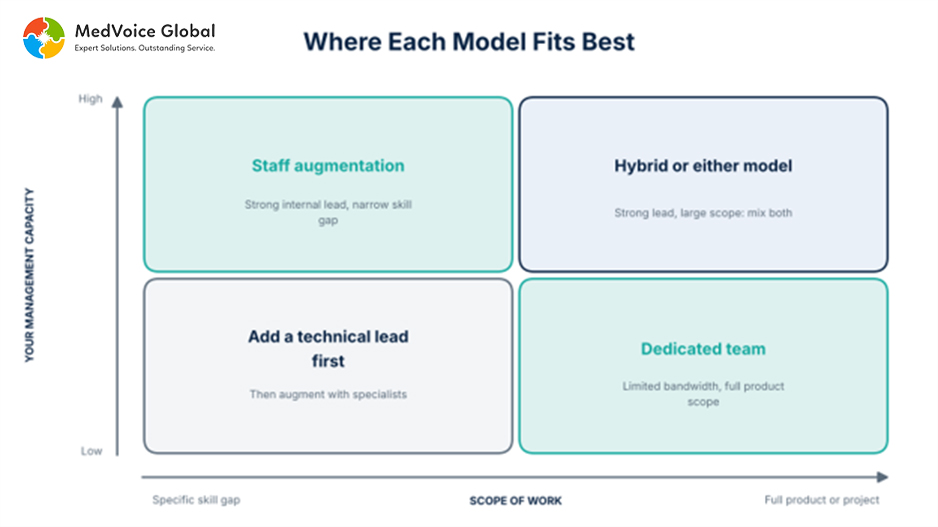
Figure 2: Management capacity and scope of work point to the right model.
Which Model Costs More, and What Are the Hidden Risks?
Neither model is cheaper in every case. Adding individual specialists usually costs less when you need one or two people for a limited time. A dedicated team can be more efficient when you need a full group, steady output and a predictable monthly budget.
- Augmentation risk: your managers carry onboarding and daily direction, and slow reviews waste paid hours.
- Dedicated team risk: you may pay for capacity you no longer need if scope shrinks, and visibility drops unless you set reporting rules.
Compare the full picture, not only rates. This in-house vs outsourced IT staffing cost breakdown looks at salary, benefits, recruiting and overhead side by side.
Can You Combine Both Models?
Yes, the two models combine well. Many companies start with staff augmentation to fill urgent gaps, then grow into a dedicated team once the work and process are proven. Others keep a dedicated core team and add specialists for short bursts of extra work.
A hybrid path lets you test a vendor before committing to a larger structure. Broader IT outsourcing services can also cover infrastructure and support alongside engineering.
ssss
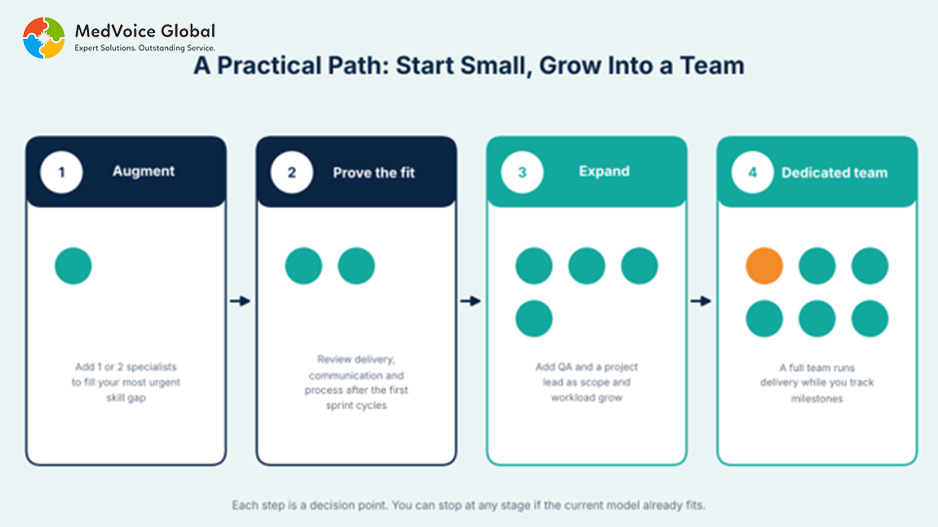
Figure 3: A practical path from staff augmentation to a dedicated team.
How Do You Evaluate IT Staffing Solutions?
Good IT staffing solutions share a few traits: transparent vetting, flexible contract options, secure handling of your data and real overlap with your working hours. Check each one before you sign, because a weak provider turns a fast hire into a slow problem.
- Vetting: technical tests, interviews and background checks.
- Flexibility: contract, contract-to-hire and permanent options.
- Security: NDAs, access controls and compliance for regulated work.
- Overlap: engineers available during your business hours.
- Replacement terms: a clear process if a fit is wrong.
For example, MedVoice Global offers staff augmentation services across contract, contract-to-hire, permanent and remote or offshore engagements. The company states that candidates are screened for technical skills and communication, and that most deployments take 7 to 14 days.
Which Should You Choose? A Simple Rule to Decide
Ask one question first: can your team manage extra engineers every day? If yes, staff augmentation is usually the faster and more flexible route. If no, or if you are building a full product, a dedicated team removes the management load and keeps delivery moving.
The staff augmentation vs dedicated team question comes down to management capacity. If you are unsure, start small with one or two specialists and review results after the first sprint cycles. MedVoice Global can support either model, or a mix of both, and help you match the structure to your roadmap, budget and risk level.
Not sure which model fits your roadmap? A short consultation can save months of rework. Get Started or call +1 972 942-0900.
Frequently Asked Questions
How fast can you add engineers to your team?
Speed depends on the role and your interview process. MedVoice Global states it can deploy skilled IT professionals within 7 to 14 days in most cases. A dedicated team usually takes longer to start because several roles must be matched and aligned before work begins.
What roles can an IT staffing partner add to your team?
Common roles include software developers, QA engineers, DevOps engineers, cloud specialists and IT support staff. Providers can also supply project-specific technical resources for a launch, migration or audit. Define the skills, seniority and duration up front so the provider can shortlist the right candidates quickly.
Who owns the code and data in each model?
Your company should own all code, documents and data in either model. Put this in writing with an IP assignment clause and an NDA before work starts. Also confirm access controls for repositories, environments and customer data, especially in regulated industries such as healthcare and finance.
Can you switch models after a project starts?
Yes. Companies often move from augmentation to a dedicated team as scope grows, or add individual specialists to an existing dedicated team. Agree on notice periods, knowledge transfer and ramp-up terms in the contract so the change does not interrupt delivery.
What should a contract include to reduce risk?
Look for clear replacement terms if a fit is wrong, a defined notice period, confidentiality and IP clauses, and reporting expectations. For a dedicated team, also agree on milestones, team size changes and how work is reviewed. Clear terms matter more than the headline rate.
Sources
ManpowerGroup, Global Talent Shortage Survey 2026
MedVoice Global, IT Staffing Services (company-stated deployment time and engagement models)