AI vs human transcription comes down to speed and price versus accuracy and judgment. AI transcription is fast and costs cents per minute, but accuracy drops with noise, accents and overlapping speakers. Human transcription costs more per minute and is commonly quoted at 99% accuracy or higher. Use AI for low-risk drafts and humans when errors carry real consequences.
Fast Draft or Final Record? The Choice Behind Every Transcript
Every transcript is either a quick reference or a record someone will rely on. A podcast outline can tolerate a few wrong words. A board meeting, patient dictation or legal interview cannot.
Automated transcription services have improved a lot, and clean audio now produces strong results. Even so, they are not a drop-in replacement for trained transcriptionists. This guide compares both options on accuracy, cost and fit, so you can decide where each belongs in your workflow.
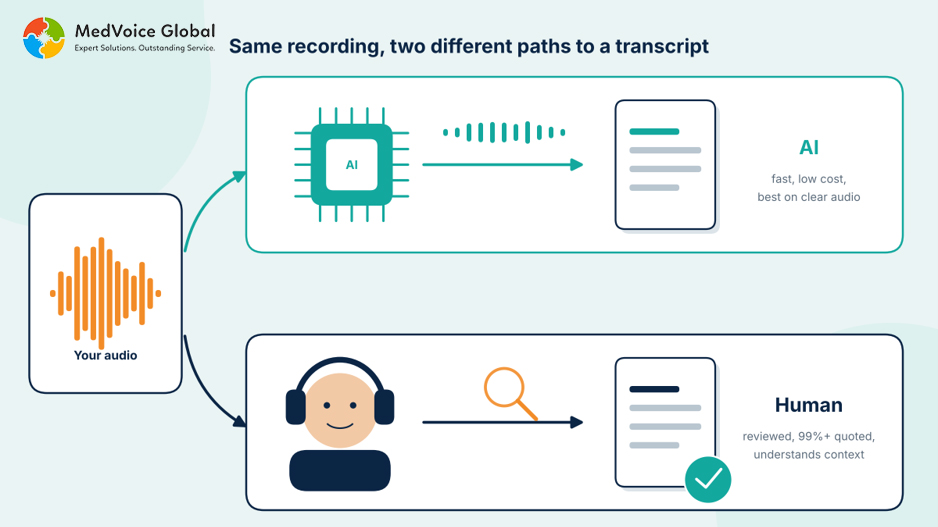
Figure 1: The same recording can follow an AI path or a human-reviewed path.
Key takeaways
- AI is fast and cheap, but accuracy depends heavily on audio quality.
- Human transcription costs more per minute and delivers the highest accuracy.
- The cheapest option is not always the lowest total cost once you add editing time.
- A hybrid workflow, AI draft plus human review, suits many business needs.
What Is the Difference Between AI and Human Transcription?
AI transcription uses speech recognition software to turn audio into text in minutes, with no person involved. Human transcription uses trained transcriptionists who listen, interpret context and type, then check the result through quality review. The first optimizes for speed and volume. The second optimizes for accuracy and accountability.
- AI transcription: software converts speech to text and is billed by the audio minute.
- Human transcription: trained transcriptionists apply context and formatting rules, and the text goes through quality checks.
- Hybrid: AI creates the first draft and a human corrects it against the audio.
Format matters too. Professional teams can deliver verbatim transcripts, which keep fillers and pauses, or clean read transcripts, which remove them. Both can include speaker labels and timestamps.
How Big Is the Transcription Accuracy Gap?
On clean audio, AI can reach the mid to high 90s in accuracy, while human transcription is commonly quoted at 99% or higher. The gap widens with background noise, heavy accents, technical terms and overlapping speakers, where reported AI accuracy can fall to 70 to 85%.
| Recording condition | Reported AI accuracy |
| Clean studio audio | 95 to 98% |
| Video conference calls | 85 to 92% |
| Phone conversations | 80 to 88% |
| Noisy environments | 70 to 85% |
These ranges come from vendor research, as cited by TranscribeTube, so treat them as ranges, not guarantees. A separate SpeakWrite cost guide puts AI at 80 to 90% under ideal conditions and human work at 99% or higher. The numbers differ by source, but the pattern is the same: audio quality drives AI results.
Accents matter too. Benchmark testing cited by TranscribeTube found word error rates of about 3% for standard accents but over 17% for heavy regional accents. Other common accuracy killers include:
- Background noise or a poor microphone.
- Speakers talking over one another.
- Technical or industry vocabulary.
- Phone-quality recordings.
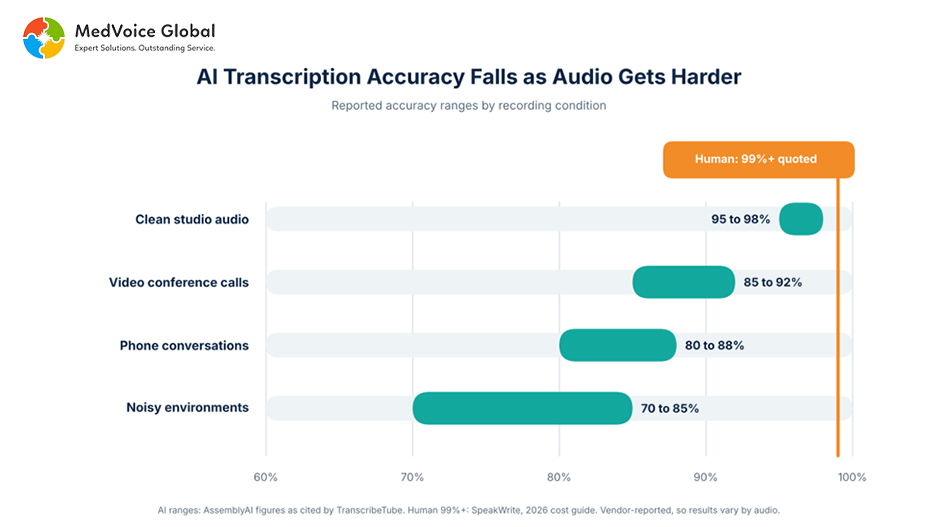
Figure 2: Reported AI accuracy ranges by audio condition, compared with the 99%+ commonly quoted for human work.
Why does a few percent matter? At 95% accuracy, about one word in 20 is wrong. That is harmless in a note you skim and costly in a contract discussion or a patient record.
AI vs Human Transcription Cost: What Will You Actually Pay?
AI transcription typically costs $0.10 to $0.50 per audio minute, while human transcription typically costs $1.00 to $3.00 per audio minute, or $60 to $180 per hour. Specialized legal and medical work sits at the higher end. Editing time can narrow the price gap, because a cheap draft still needs cleanup.
- AI: $0.10 to $0.50 per audio minute, delivered much faster.
- Human, standard work: $1.00 to $2.50 per audio minute.
- Human, specialized work: $1.50 to $3.00 per audio minute for legal, medical and compliance content.
- Price drivers: turnaround time, audio complexity, speaker count and formatting needs.
Price the full job, not only the rate. A draft that needs heavy cleanup can cost more in staff time than it saves, and one uncaught error in a legal or clinical record can cost far more than the transcript itself. These price ranges come from the same SpeakWrite 2026 guide. The same full-cost logic applies to hiring decisions, as this in-house vs outsourced IT staffing cost breakdown shows.
Outsourcing can also lower costs compared with building an in-house team. MedVoice Global states that its general transcription services can reduce operational costs by up to 60%, and its FAQ cites typical savings of 40 to 60% compared with in-house transcription.
When Do Automated Transcription Services Make Sense?
Automated transcription services make sense when speed and budget matter more than perfect wording, the audio is clear and a mistake would have low impact. They work well for first drafts, searchable archives and internal notes that people skim rather than rely on as a record.
- Internal meeting notes and brainstorms.
- Draft transcripts for podcasts or videos that an editor will clean up.
- Large archives you need to search by keyword.
- Clear recordings with few speakers.
When Should You Use Human Transcription?
Use human transcription when accuracy is critical, the audio is difficult or the transcript will become a record. That includes legal proceedings, regulated healthcare content, research interviews and board minutes, where one wrong word can change meaning or create risk.
- Legal work, where legal transcription services must capture exact wording.
- Healthcare and other regulated content, where privacy rules apply. See how HIPAA compliant outsourcing protects sensitive data.
- Research interviews and focus groups that need verbatim detail.
- Recordings with accents, crosstalk or technical vocabulary.
- Anything you will publish, file or send to a client.
Is a Hybrid Approach Better Than Choosing One?
For many teams, yes. In a hybrid workflow, AI produces a fast first draft and a trained reviewer corrects names, terms, speaker labels and formatting against the audio. You get speed on the first pass and human accountability on the final transcript.
Hybrid works best when volume is high but the final copy still matters, such as webinars, client calls and published interviews. Many companies also fold transcription into broader business process outsourcing programs and pair it with virtual assistants, as covered in the role of virtual assistants in business process optimization.
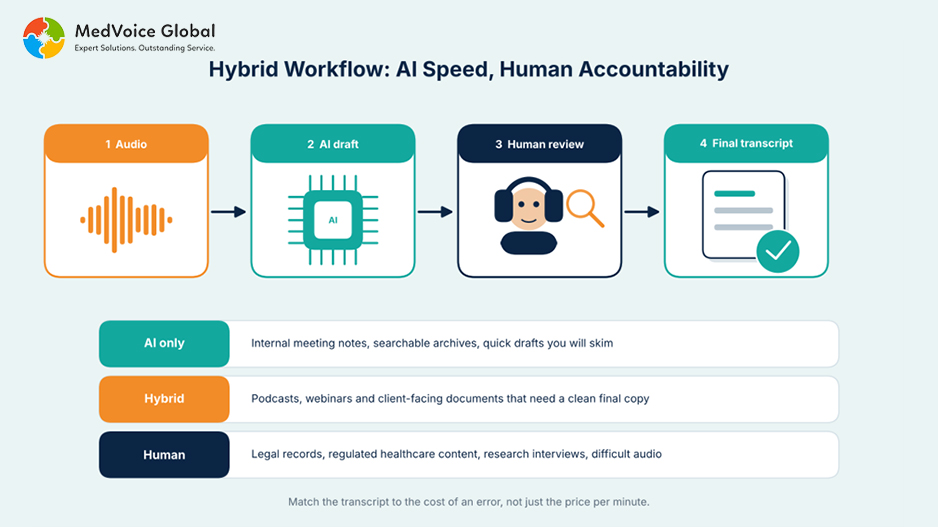
Figure 3: A hybrid workflow, and the use cases that fit AI only, hybrid or human transcription.
Quick Guide: Which Option Fits Your Situation?
Match the method to the cost of an error. Low-risk notes from clear audio suit AI. Public or client-facing content suits a hybrid workflow. Legal, clinical and compliance records suit human transcription, ideally with a quality review before anything is filed or shared.
| Scenario | Best fit |
| Internal team meeting notes | AI |
| Searching a large audio archive | AI |
| Podcast or webinar transcript | Hybrid |
| Customer-facing transcript or report | Hybrid or human |
| Legal deposition or hearing | Human |
| Patient dictation or clinical notes | Human, with privacy controls |
| Interview with accents or crosstalk | Human |
Which Should You Choose? A Simple Rule to Decide
Match the transcript to the risk. If a wrong word is harmless, AI is enough. If an error could cost money, trust or compliance, add a human. If you want both speed and reliability, use an AI draft with human review, and test a few files before you scale up.
MedVoice Global offers human-led transcription for business, media, academic and research audio, with multi-level quality checks, speaker identification, timestamps and verbatim or clean read formats. Project-based, hourly and ongoing support models are available.
Need transcripts you can rely on? Share your audio type and volume, and a specialist will help you choose the right approach. Get Started or call +1 972 942-0900.
Frequently Asked Questions
Can AI transcription replace human transcriptionists?
For clean, low-risk audio, AI can replace manual typing. For legal, medical, research or published content, it usually cannot, because accuracy drops with noise, accents and overlap, and software cannot be held accountable for errors. Most organizations end up using AI for drafts and humans for final records.
What is a good accuracy rate for a transcript?
For business records, aim for 99% or higher. At 95%, roughly one word in 20 is wrong, which is risky for contracts, legal records or clinical notes. For internal notes you only skim, lower accuracy is often acceptable. Decide the rate based on the cost of an error, not the price per minute.
Is AI transcription safe for confidential recordings?
Safety depends on the provider, not on whether AI or humans do the work. Check where files are stored, who can access them, whether your data is used to train models and whether the provider signs NDAs. For regulated content such as healthcare, confirm compliance requirements before uploading any audio.
How can you improve AI transcription accuracy?
Record in a quiet room, place a good microphone close to each speaker and avoid talking over one another. If the tool allows custom vocabulary, add names and technical terms before you start. Better input audio improves results and lowers the editing time needed afterward.
What is the difference between verbatim and clean read transcripts?
A verbatim transcript captures every word, including fillers, false starts and pauses. A clean read transcript removes them for easier reading while keeping the meaning. Legal and research work often needs verbatim, while business and media content usually suits clean read.
Sources
SpeakWrite, Transcription Costs in 2026 (price ranges, AI and human accuracy)
TranscribeTube, AI Transcription Accuracy (accuracy by recording condition, citing AssemblyAI and Tolly Group)
MedVoice Global, General Transcription Services (company-stated savings and service details)